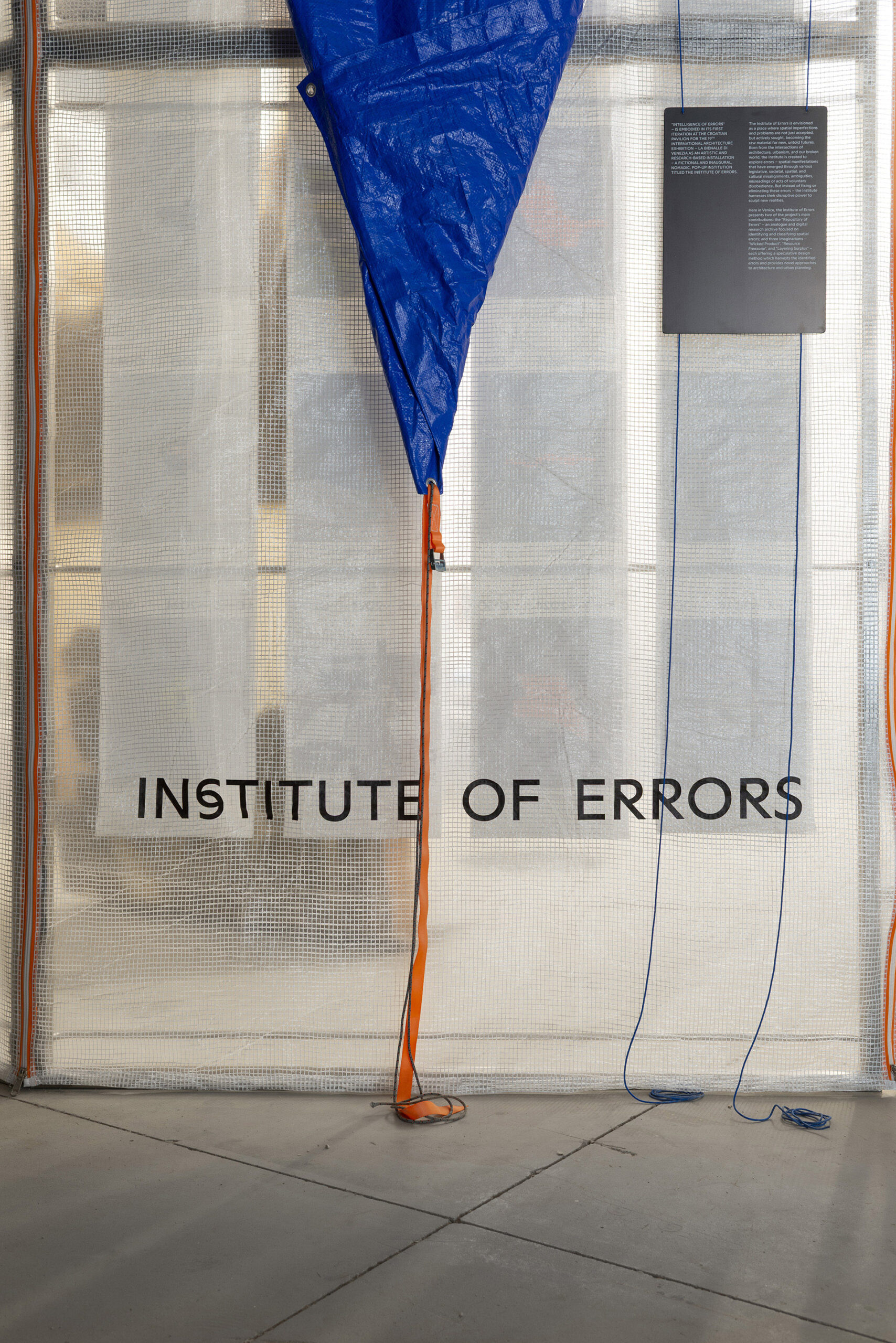


Intelligence of Errors
Project team: Institute of Errors – Ida Križaj Leko (curator and architect), Ana Boljar, Jana Čulek, and Iva Peručić (architects), Ana Tomić and Marino Krstačić Furić (designers), Marko Luka Zubčić (philosopher).
“Intelligence of Errors” – the Croatian Pavilion at the 19th International Architecture Exhibition – La Biennale di Venezia, is an artistic and research-based project dedicated to investigating ways in which errors in spatial design and policy can be utilized as resources for learning and making new worlds.
“Intelligence of Errors” links itself directly to the overarching topic of the 19th International Architecture Exhibition “Intelligens. Natural. Artificial. Collective.”, by building on the insight that identification of one’s own errors is the key prerequisite for the development of collective intelligence systems within non-ideal and complex conditions. Errors in the context of this project are seen as conditions created by human action or inaction, which manifest themselves within our environment. But instead of merely treating errors as problems to be fixed, “Intelligence of Errors” invites a different approach, one that stays with the error, and learns from it.
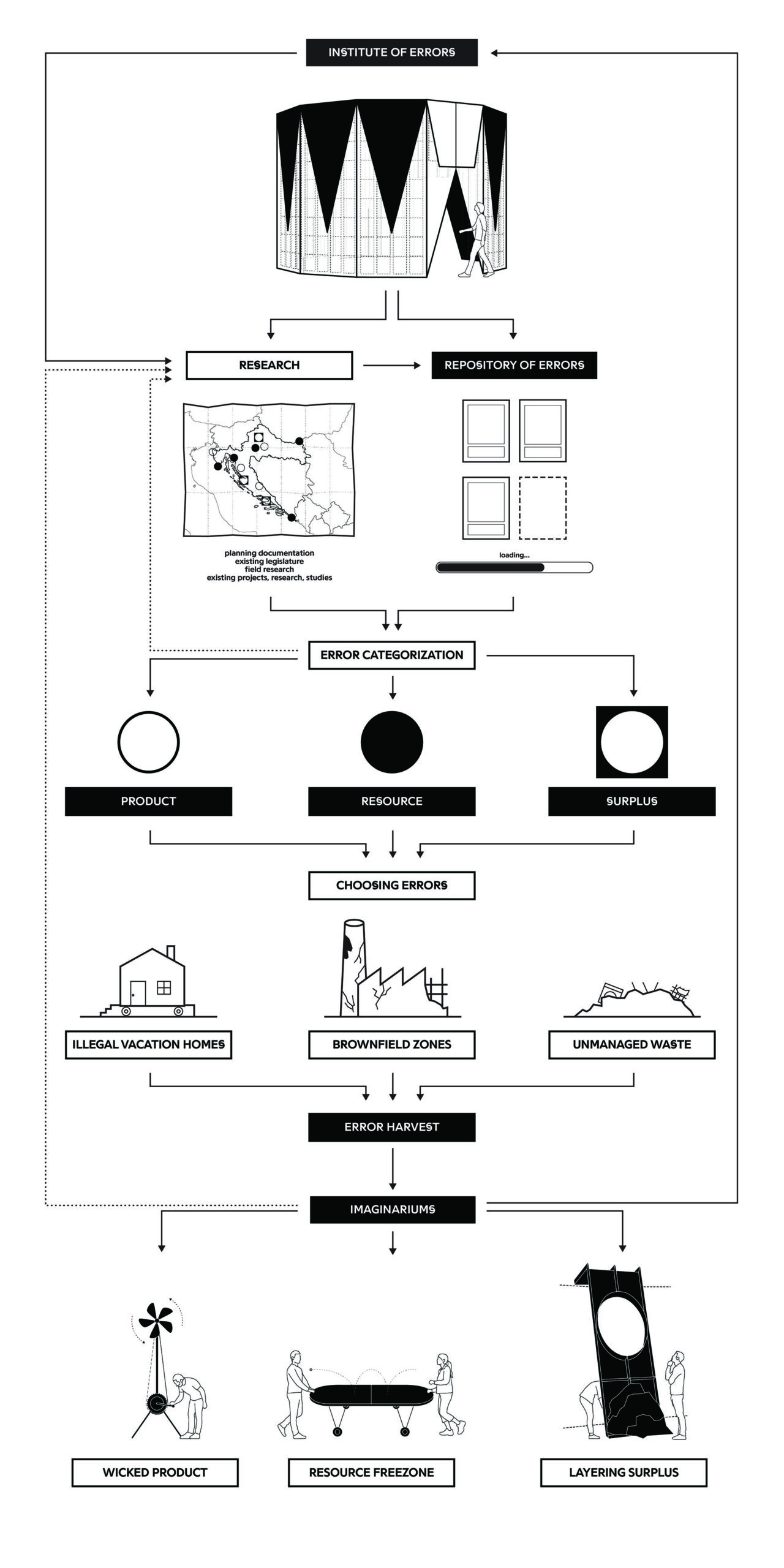
“Intelligence of Errors” is inspired and developed from Error Harvest – an educational tool for designers of complex socio-technological and spatial systems under non-ideal conditions. Error Harvest is a flexible whose components and procedures can be reconfigured to suit different contexts and goals. Yet its core function remains consistent: to offer a different perspective on flaws, breakdowns, shocks and disequilibria inherent to a specific spatial context or system. Rather than viewing these identified errors solely as problems to be solved, Error Harvest teaches us to treat them as sources of unique insight regarding the world’s resistance to our design plans, and to explore their potential for collective benefit.
While “Intelligence of Errors” – as a larger project – pursues a planetary-scale examination and development of a freely diverse set of design strategies, its iteration in Venice is distinctly rooted in Croatian phenomena and shaped by local knowledge derived from architectural practices within the Croatian context.
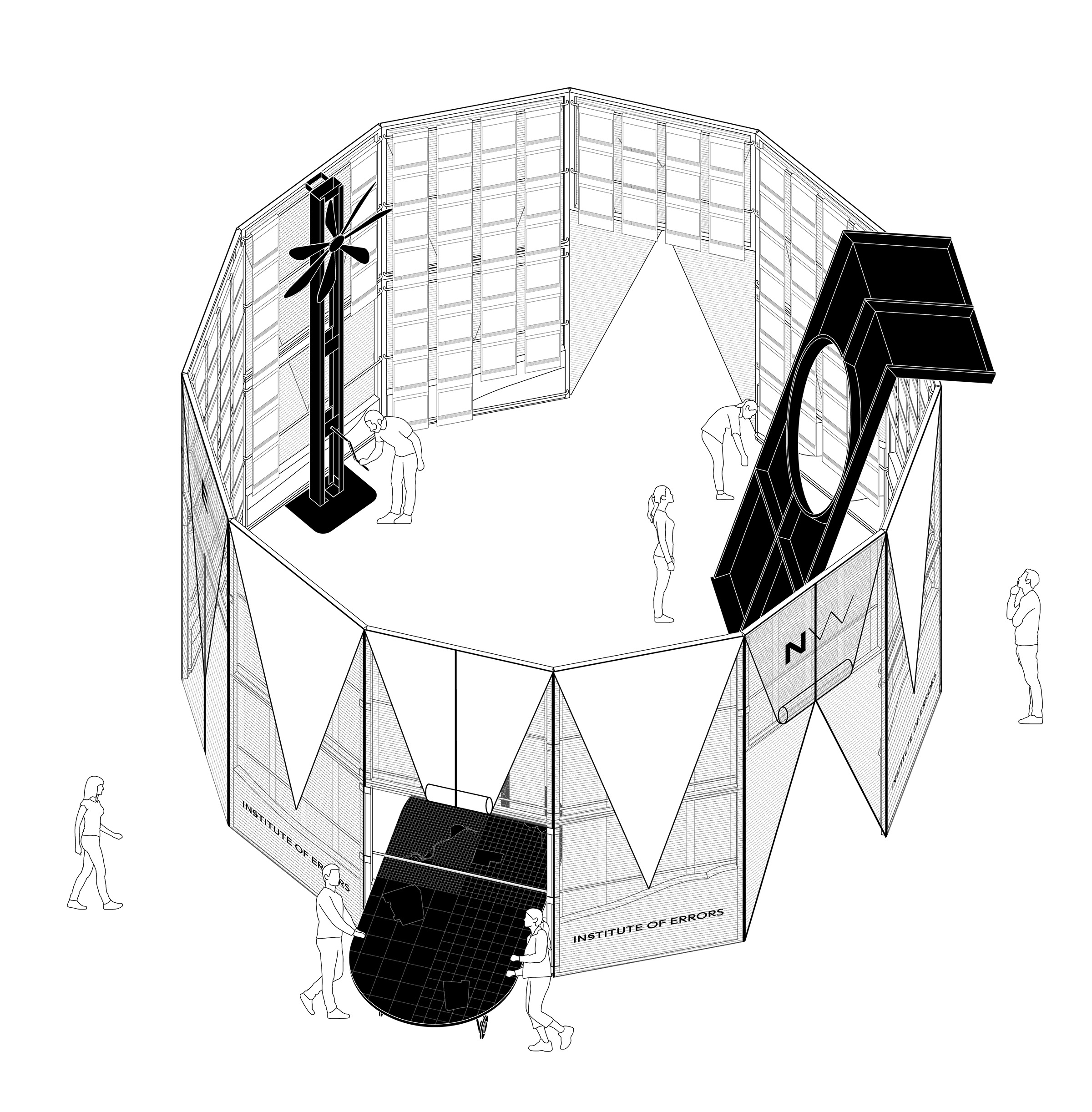
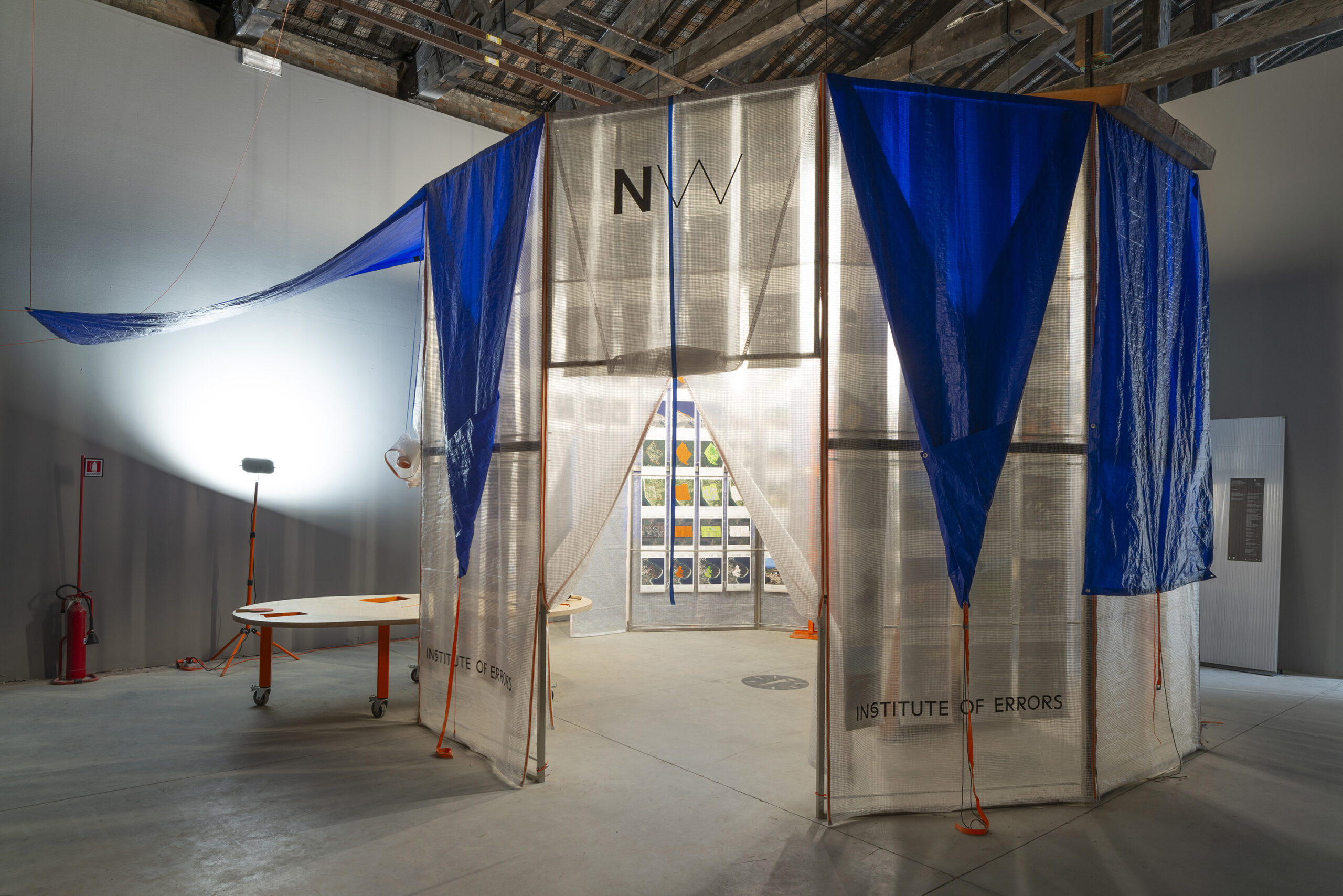
During the 19th International Architecture Exhibition – La Biennale di Venezia, “Intelligence of Errors” will be presented at the Croatian Pavilion in the Arsenale through the spatial manifestation of the Institute of Errors – the project’s primary organizing Imaginarium. The Institute of Errors is designed as a nomadic pop-up research and design institution dedicated to examining and utilizing spatial errors towards the collective good. It serves as the central invitation to researchers, architects, designers, planners, hackers, maintenance experts, scientists, engineers, feral makers, rural innovators, underground strategists, and all free peoples to contribute to our shared understanding and imaginative use of errors.
Welcoming visitors to its mobile and travelling form, it will showcase both the Repository of Errors and three Imaginariums as key components of investigating and designing with errors.
The Repository of Errors is a newly established collective resource, composed of spatial errors gathered through a research-driven process, including fieldwork, analysis of existing spatial plans, legislature, as well as insights drawn from existing scientific, artistic, and practice-based projects. Within the Repository, the collected Errors are categorized into three main families – Resources, Products, and Surplus – each addressing a specific aspect of the environment and its related territory.
The three presented Imaginariums – alongside many more that the Institute of Errors aspires to develop – engage with specific phenomena from each error family. While these phenomena hold particular relevance for the Croatian context, they are by no means exclusive to it. Each phenomenon is addressed through a tailored design approach for working with erroneous environments, resulting in novel design methods that work together with the errors – and not against them. Additionally, the Imaginairums address the currently observed slow, top-down, inflexible, and non-inclusive urban planning practices. In their stead, they propose methods which productively harvest errors, survey and plan from the bottom-up, consider all scales, layers, and living inhabitants, respond quickly in the “here-and-now”, and remain flexible through planning adaptive capacity. Through the Imaginariums, the identified Errors become the foundation for a different mode of development – a parallel world that might just cross into our own.
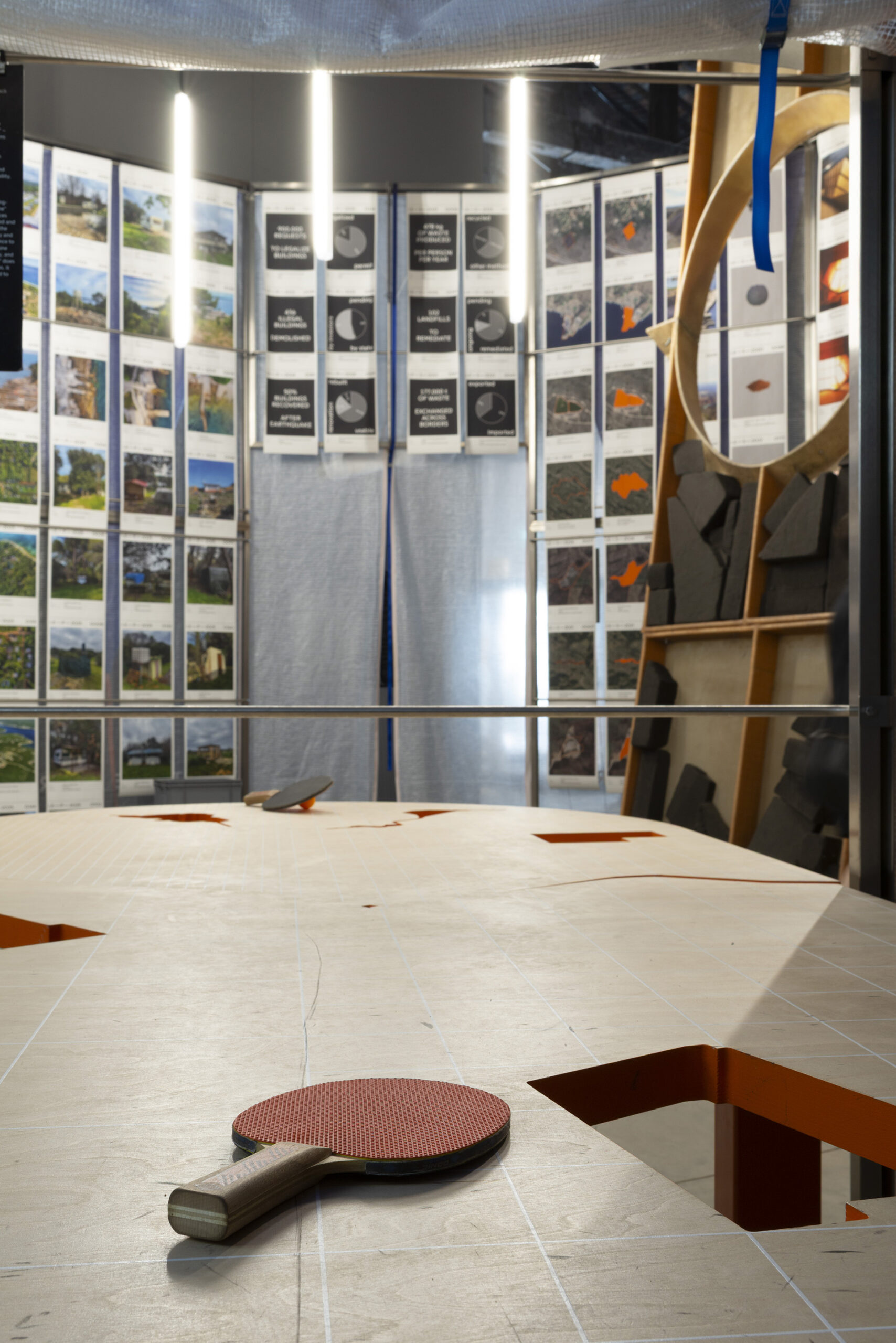
The first Imaginarium, titled “Resource Freezone”, emerges from the Resources family of errors, and develops a method for addressing the numerous brownfield zones in Croatia’s urban environments. It identifies these areas as “skipped-over” territories that have rapidly decayed while awaiting their future (re)purpose. “Resource Freezone” proposes to exclude these territories from existing spatial plans, current jurisdictions, and market valuation, while simultaneously inviting both humans and non-humans into a shared “waiting room”. It imagines a space for experimentation, unpredictability, and for learning togetherness by fostering “collective intelligence”.
The second Imaginarium, titled “Wicked Product”, developed from the Products family of errors, harnesses the feral behaviour of illegal vacation settlements to create a method of addressing infrastructural and spatial issues relating to mass tourism, illegal building practices, and the worrying trends of land parcelization. It creates an “artificially intelligent” system by taking the self-sustainably enhanced mobile home as its primary building block. It proposes a planned infrastructural and spatial system for season-based urbanism – one that “feeds” tourists during summer months, and local inhabitants during winter.
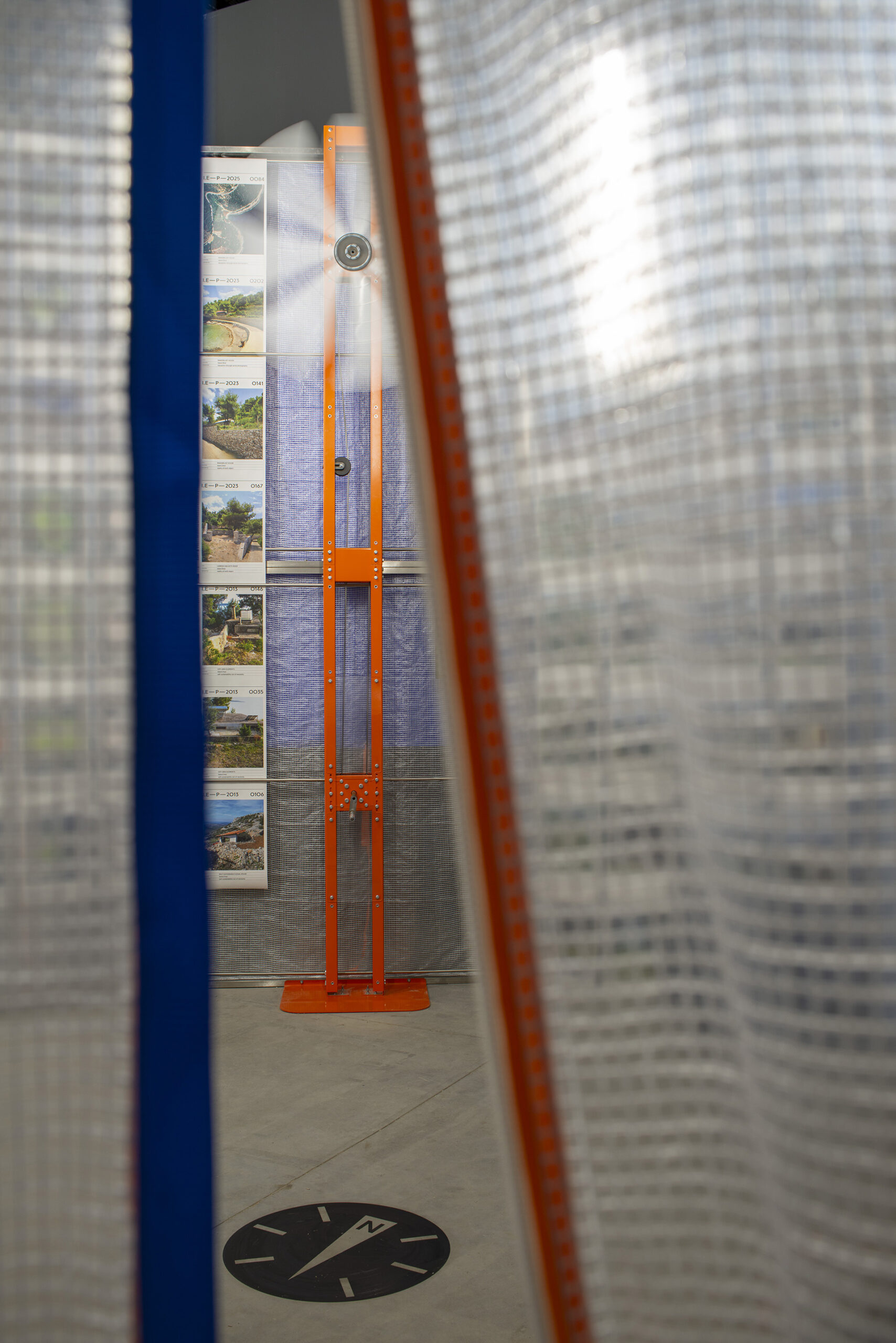
The final Imaginarium, titled “Layering Surplus”, emerges from the error family of Surplus, tackling the topics of excess materials, (building) waste, and toxicity. By repurposing surplus waste materials into useful assets, it provides possible solutions for future climate threats. Located in peripheral areas of big-box business, storage, and logistics developments, it harvests waste as a building material for future refuges – burying existing structures while simultaneously creating a new spatial layer for future wilderness, allowing for “natural intelligence” to take over, in whatever form it may occur.
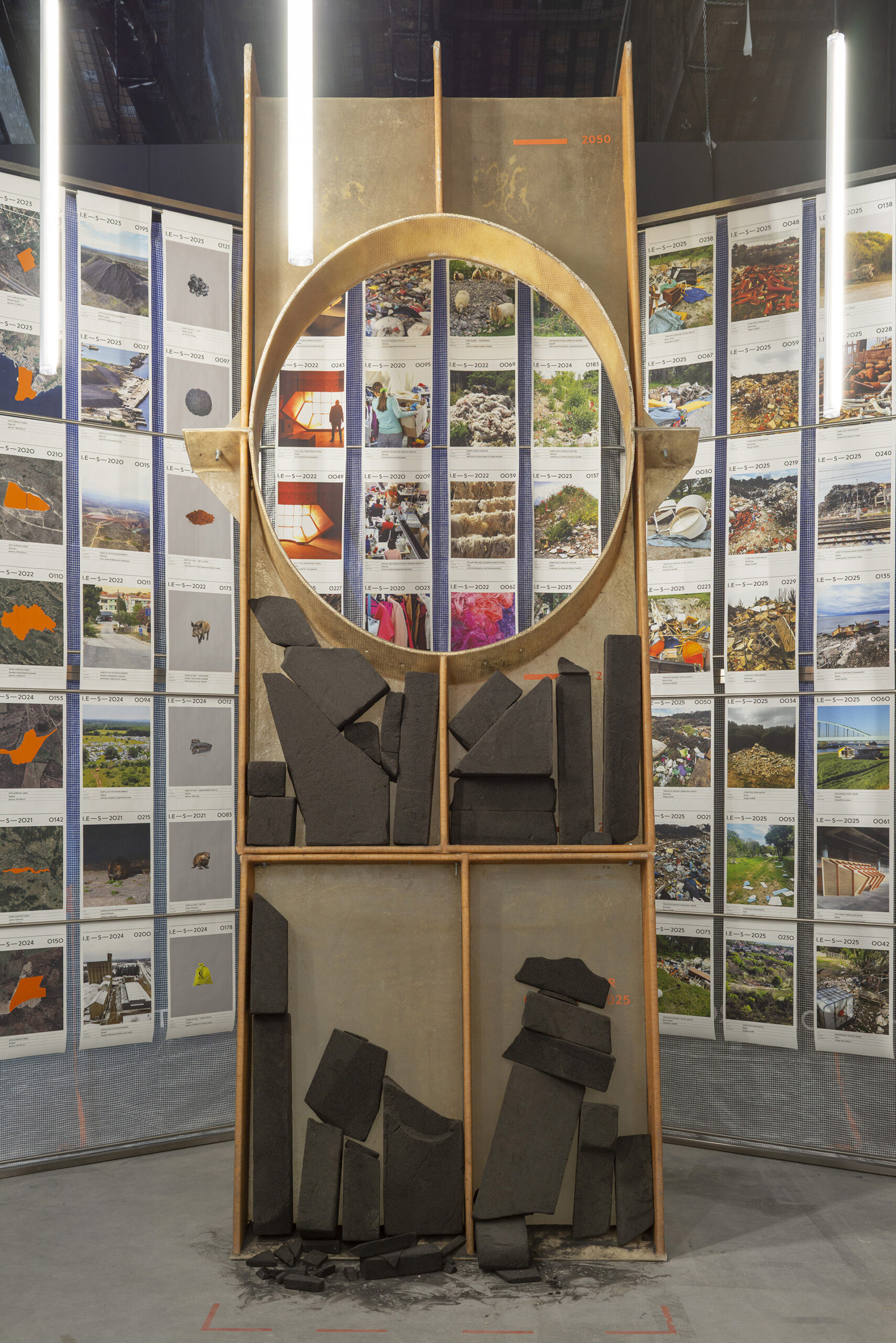
“Intelligence of Errors” is envisioned as an open-ended research and design project, with the Croatian Pavilion serving as its initiating iteration. At the heart of this project lies the proposition that each locality – however delineated – contains both its own idiosyncratic errors and those that, despite differences in appearance, recur across various contexts. Accordingly, “Intelligence of Errors” is an invitation for you to contribute not only the Repository of Errors, but to engage with ideas on new configurations of errors, their potential for collectively beneficial use, and the creation of new iterations of this project.